


Solidarity in Resistance:
Definition of Terms and the Elephant in the Room
On May 1st 2025– May Day– there was a rally and march in Eugene, Oregon, put on by labor and union organizers. Conflict arose between attendees about what constitutes “correct” behavior at a protest. While dispersing from the May Day march, there were multiple arrests and citations of individuals who had attended, and various statements and discussions emerged.
This piece was written to define terms that aren’t universally or uniformly understood, and to contribute context to some of the recent events and local political moment we are in.
Division in the Ranks: Defining Terms
There is a dynamic that has been alive and present in both protest spaces and depictions of protest spaces for a long time: a distinction between a “good” protester and “bad” protester. The good ones might be those who stay on the sidewalk during marches, don’t do property destruction during actions, and generally stay in compliance with the laws. The “bad” ones are those who take to the streets, engage in direct action against businesses and buildings that are gaining profit from doing harm, or otherwise becoming disruptive and confrontational in demanding or creating change. The good ones usually want to distance themselves from the bad ones. Often this is because they have real fear of what will happen if they disobey, or become in any way non-compliant with the state. This hinges on the idea that compliance will protect them. Only the “bad” ones are punished with arrest, deportations, brutality, and murder at the hands of the state. Often when those who have caused disruption are punished, a narrative emerges that they in some way deserved it.
What follows are colloquial definitions, derived from personal experience, conversations with activists and organizers, and various sources of history and literature.
State repression: When the government or its enforcers decide to use different types of legal or illegal tactics to subdue or stop a social movement. Sometimes it includes media and/or private security.
Peace Police: When people who are not police or law enforcement, typically from inside a resistance movement or protest, try to control or repress people who are choosing to be more disruptive or confrontational than them – these are members of a protest that try to get people to follow laws. They have a belief about how the protest should go, and employ different tactics to get others to follow those laws, such as asking, physically forcing them, using law enforcement to get them in trouble, and general manipulation.
Horizontal repression: When people inside of movements find reasons to stop each other -usually because of fear and/or control- from doing the actions that feel important to them. Horizontal repression refers to people in protest or movement spaces doing the work of the state for them by stopping others from becoming materially disruptive or confrontational.
Direct action: Cutting out the middleman: solving problems yourself rather than petitioning the authorities or relying on external institutions. Any action that sidesteps regulations and representation to accomplish goals directly is direct action—it includes everything from blockading airports to helping refugees escape to safety and organizing programs to liberate your community from reliance on capitalism.- Definition from Crimethinc
Sometimes, horizontal repression or peace-policing serve to keep a protest symbolic, and prevent it from becoming Direct Action.
“Protest is begging the powers that be to dig a well. Direct Action is digging the well and daring them to stop you.” – David Graeber
For a longer discussion on Direct Action with a frontline activist from Palestine Action, the UK-based direct action network targeting Elbit Systems—an Israeli weapons manufacturer— listen to the Rev Left episode Palestine Action: Direct Action Against the Death Machine.
On Police, Law Enforcement, and the State
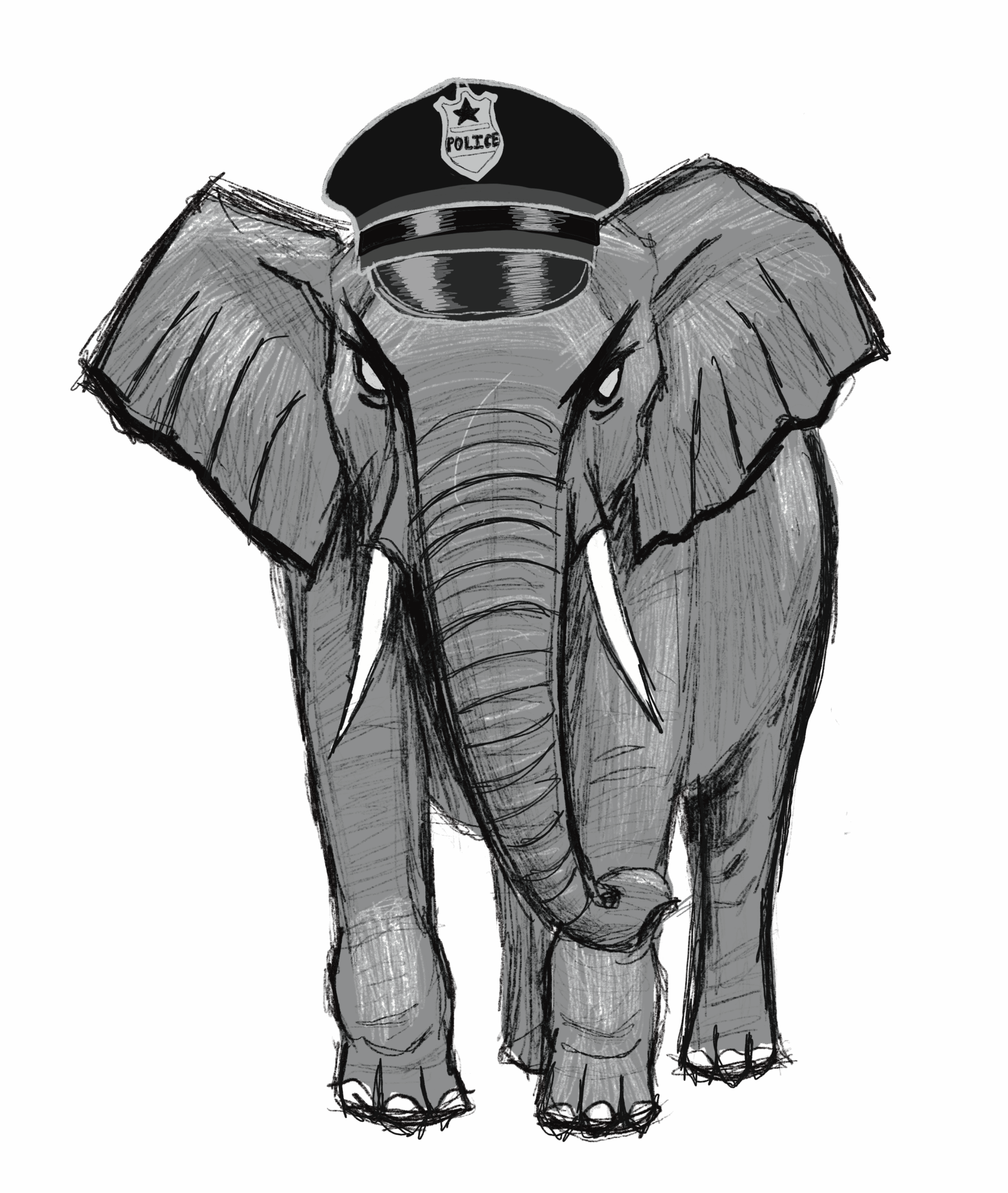
When organizing across the liberal to progressive to radical political spectrum, police and law enforcement officers are the uniformed elephants in every room. Many of the diverging positions on what tactics are appropriate when working toward change can be traced to diverging approaches to the police and government, and the risks that follow. The militarized state and its occupying military force – that is the police – live among us and control what is allowed to happen.
The police and law enforcement’s role as enforcers of unjust systems and laws cannot be ignored. At the May 1st protest, the community had just celebrated the Haymarket strikes and riot, which brought workers the 8-hour work day, and ended in rioters being executed by the state. There is a glaring dissonance when people today celebrate historic resistance while failing to indict the state and law enforcement that brutally repressed those movements. The State relies on participation from us, the masses, to maintain control. When we drop the illusion that compliance, apologetics for, and collaboration with the state will be rewarded with meaningful change, that control slips.
A(ll)C(ops)A(re)B(astards)
The slogan ACAB indicts the entire policing system(and therefore anyone serving it) as inherently corrupt. When we consider that corruption is itself corrupt, it doesn’t matter if any individual officer could be considered a nice person, or even if they joined the force out of a genuine desire to do good and protect life. The system of policing in the United States began as slave patrol, and has continued in varying forms to protect the interests of those possessing wealth and private property, and to enforce racial and socio-economic divisions. Good intentions become irrelevant if we are measuring impact over intent.
Solidarity:
Several local leftist organizers were asked to define what solidarity means to them:
“Doing things for other people, showing up for other people who are experiencing repression or danger or violence. Showing up for each other because you have a shared vision. Whatever kind of privilege you have, using it to show up for people. Leveraging whatever position you have. A care for collective well-being. A form of collectivism where you share responsibility for caring for one another, and creating the conditions you want to see in the world.” – O
“Working together across interests and causes for the overall larger cause. Big picture shared goals.” – Z
“Solidarity is something you actively forge in the struggle against all the forces of the world that oppresses and represses the possibility for a life worth living; it’s a recognition of ourselves and others as part of a struggle that can’t be waged without any of us and which we’ll wage with and for what we each could be in the world that we fight for…. a collective commitment to struggle – actual , material struggle in action, and the impossible day after, since we’ll all be there to live it as long as in solidarity we leave no comrade behind.” – M
“Solidarity is defined by action, by the follow-through on the intention to show up for others, by whatever means you’re capable of.” – A
“Being in support of a person or a movement, not only in feeling but in action.” – V
To be in solidarity means not denouncing the brave, the rebellious, for pushing harder and risking more to fight for what we all want. If others are acting inside their own boundaries and risk capacity, and not controlling or endangering others, accept them too. To be in solidarity is to use diverse tactics of resistance and not denouncing or betraying each other if we are working toward the same goal.
In conclusion:
Be in solidarity, and never, ever, collaborate with the state.
Sources for the origin and evolution of policing:
Where do the Police Come From? by Neal Shirley and Saralee Stafford STAFFORD
The New Jim Crow, by Michelle Alexander
Slave Patrols, by Sally Hadden